Note from the Editor...
Two of BIPC’s longstanding projects are awarding scholarships to cultivate young journalists and monitoring Big Island elections. Huge mahalos to BIPC Secretary Tiffany Edwards Hunt for doing the marathon session at the counting center and Treasurer Michael Phillips for spending time at the West Hawaii Voter Service Center. This issue brings our reports on those two activities. Coming soon – details on our holiday luncheon/Torch of Light presentation, which this year will be held in the Kailua‐Kona area, likely on Dec. 10. We’re still nailing down locations and availabilities and we’ll let you know as soon as we know. Have something for Gleanings? Email me: nclauer@gmail.com.
Big Island Press Club awards scholarships to four students
The Big Island Press Club awarded scholarships totaling $4,000 to four students this year. The press club annually awards scholarships to students pursuing a higher education in journalism or a related field.
The recipients are:

Lichen Forster, of Mountain View, was awarded the $1,000 Bill Arballo Scholarship. A sophomore geology major at the University of Hawaii at Hilo, Forster is editor in chief of the student newspaper, Ka Kalahea and plans to be a science journalist. This is Forster’s second award.
Bill Arballo was a founding a member of Big Island Press Club in 1967 and its first president. A former United Press International reporter, he is honored through a scholarship funded by an annual donation of $1,000 from Bill's daughter, Teresa Barth, and her husband, Bill. Arballo died in 2016.
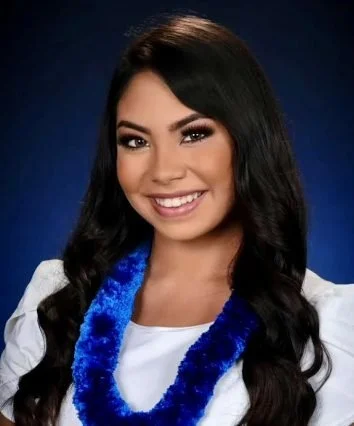
Lehia Coloma, of Kurtistown, received the $1,000 Hugh Clark Scholarship. A 2022 graduate of Kamehameha High School – Hawaii Campus, Coloma will be a freshman at Grand Canyon University in Phoenix.
Hugh Clark was called a “newspaperman’s newspaperman.” He wrote about crime, politics, sports and volcanic eruptions for the Honolulu Advertiser and the Hawaii Tribune-Herald. He was a charter member of the Big Island Press Club. Clark died in 2015.
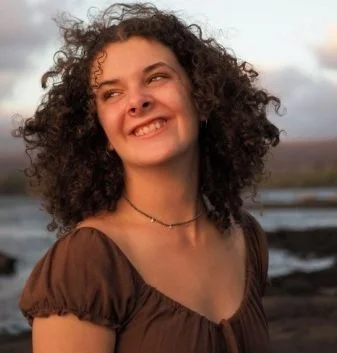
Briana Harmon, of Waimea, received the Robert Miller/Jack Markey Scholarship of $1,000. Harmon graduated from Hawaii Preparatory Academy this year and is headed to Davidson College in Davidson, North Carolina.
Robert Miller was a UPI reporter whose 1968 speech to BIPC inspired Ouida Hill, wife of state Sen. W.H. “Doc” Hill, to donate $1,000 to start the Miller Scholarship. Miller died in 2004. The late Jack Markey was a visible street-side fixture in Hilo. With poor vision and unable to drive a car, Markey, a senior citizen walked and hitchhiked around town to sell radio advertising, He recruited new members for BIPC and was instrumental in building the BIPC scholarship endowment.
Kehaunani Manuola-Dasalla was awarded the $1,000 Yukino Fukabori Scholarship. Manuola-Dasalla, daughter of Daisyann Dasalla of Hilo, is returning from Sylmar, California, where she last attended Glendale Community College, to enter the University of Hawaii at Manoa as a journalism major.
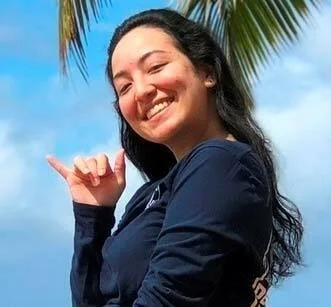
Noteworthy for reporting “hard news” for the Hawaii Tribune-Herald as early as the 1930s when women reporters were generally on the society page, Fukabori, who later taught news writing at Hilo High School funded a scholarship in 1993. She died in 1995.
The BIPC Scholarship committee for 2022 is: Michael Phillips, meteorologist and BIPC treasurer; Royelen Boykie, self-employed social media consultant and BIPC board member; and John Burnett, police and courts reporter for the Hawaii Tribune-Herald, BIPC president and three-time BIPC scholarship recipient.
Monitoring the election process: BIPC board members on the scene
Report from Tiffany Edwards Hunt:
On the day of the Primary Election, I left my house at 12:45 p.m. to report to the County of Hawai`i’s Counting Center (in the former Walgreen’s building in Waiakea Center). I knew it was going to be a late night, having covered elections as a reporter. But as a media observer, I didn’t realize how far into the night and the next morning this volunteer stint would stretch. In fact, when I finally left the building with the last of the most committed volunteers, it was 5:30 a.m. and the sun was just starting to appear over the Walmart building across the parking lot.
As astute Press Club members may know, the role of the media observer for elections has traditionally been carried out by our very own Bob Duerr. But he is seeking a more leisurely life these days, and another one of us members must carry out this critical role for primary and general elections. This election year I volunteered to fill in Bob’s shoes. When I told him how long I was at the Counting Center though, he said that was “wild,” his record was 3 a.m.
One of the key reasons we volunteers stayed so late is that we were witnessing the volunteers for the manual audit finally being able to conduct their audit. If anything was awry this election it was the fact that the State of Hawai`i Office of Elections had the audit volunteers in a holding pattern all night. The problem was that the audit manual and the traditional way of auditing ballots hadn’t factored in the new way that people are voting in the state of Hawai`i. Gone are the days where people show up and vote at their assigned precincts. Because we now mail in our ballots or drop them off at Voter Service Centers, this created a conundrum for the audit volunteers who typically choose ballots to count according to precinct.
Throughout the night, there were various eruptions of frustration against the contingency of volunteers waiting to conduct the audit. This only provided fodder for what I can best describe as conspiracy theorists who were also serving as observers to be all the more critical of the county and state election process.
Yes, you read that right, in the County of Hawai`i’s Counting Center, there were conspiracy theorists serving as observers. But some of them didn’t merely serve as observers. They were actually agitators. Throughout the night, I shifted from watching volunteers processing ballots to watching the conspiracy theorists watching — and criticizing — the observers. At one point, we had an outright clash with each other, but it was not until I had reached a saturation point with them and collected information about them to realize that these people were not interested in observing, they were intent on twisting and contorting reality into their perception that America’s elections are “rigged.” Apparently, the Republican Party had sent out a mass email, calling for people like them to volunteer this election year. These folks that I encountered had heeded that call.
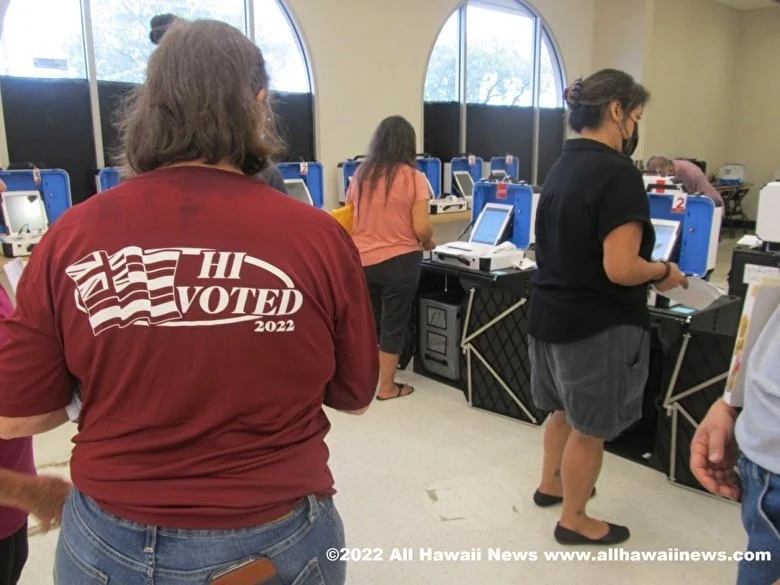
When I first showed up at the Counting Center shortly after 1 p.m., the woman at the door handed me a name card to wear around my neck. Everyone else’s name cards were pink and had their names; mine was yellow and read, “media.” I kid you not, at least four people, mostly the conspiracy theorists, thought my name was “Media.” One of them took the liberty of showing me around the building, once the head of the operation cleared it with the State of Hawai`i that I could actually be there and could leave the seat I took in the front area. The man who showed me around pointed out that the Hart computers weren’t hooked up to the internet, and he was proud of that fact because he and fellow conspiracy theorists had argued against having the internet on in that room until it was time to send the first report to Honolulu.
At one point, a lead volunteer observer, Karen Shindo, pulled my escort aside and told him that he shouldn’t be speaking to me because I was the media. I had to interrupt and let her know that I was “Bob.” She knew Bob Duerr and his traditional role in the Counting Center, so she realized that I had the wrong color name tag and that there was a misunderstanding regarding my role in that room that night. We became friends over the course of the evening and into the next day.
As the man was showing me around, he introduced me to a fellow observer who also thought my name was Media, who then looked at me critically with her beady eyes and said, “Who do you work for?” I then ventured into a long explanation about the Big Island Press Club and the fact that I’m not a working reporter, I’m just representing my club that promotes transparency and openness. She seemed okay with that, so she whispered to me that I should be questioning why there are election workers with laptops in the room.
As the afternoon turned to evening, things just got even wackier with that bunch. We had a guy wearing American flag board shorts, a visor, and a fanny pack, hovering over the tablefuls of volunteers opening mail-in ballots, and he clearly looked like he was trying to see how people had voted as the volunteers were flattening out the ballots and preparing them to go into the Hart machines for counting. Volunteers ultimately shared with me their discomfort with what can best be described as lurking. He didn’t last too late into the evening. Apparently he was from Kona like many of the others, and opted to retreat to his hotel room because his back started hurting him.
I had positioned myself at a table with these people, at first out of ignorance on where would be the most optimal place to sit, but then out of curiosity as to what actually was going on with these people. Throughout the night, I would watch them collect numbers, presumably from ballot boxes that would be stacked in an area of the room, after processing. This distinctive group of people would write down the numbers and then try to calculate, using old-school math, because all of our cell phones had been confiscated at the door. One of the women mentioned she would take the numbers into the bathroom, presumably because she had a hidden cell phone that she would use in there to do the calculations.
Throughout the night these people would walk around with their arms crossed, scowl, shake their heads in disgust, and then whisper to each other. I could not figure out what was their problem. But then, after Hart sent to the state the first report, the guy who had been my escort, the one who told me he was a Republican from Mountain View and worked for Department of Water Supply, went up to a Hart representative and started accosting him. Three women from their group that were left volunteering also surrounded the Hart representative. They were demanding Ballot scanning equipment testing that the Hart representative print out the first report and give it to them. They just would not back down. I was a few feet away, sitting at our table, and I just couldn’t take it anymore. I asked them who they thought they were, they weren’t media, they were observers, and if they really wanted the report, they could go outside, find some internet, and see the report posted online. I then let them know that I didn’t appreciate the negative energy they were casting throughout the night, making it seem like all the volunteers in the room were doing something nefarious, and what the heck were they doing with all their number calculations and sneaking cell phones when they shouldn’t have cell phones.
There was a police officer who had to be stationed outside the Counting Center all afternoon and night, apparently due to the fact that someone from that group had already been kicked out of the Counting Center for trying to mess with Hart’s equipment. He came inside the building to observe the group’s confrontation with the Hart representative and my defense of him. The GOP from Mountain View accused me of being “belligerent,” and I noted that he and his group were in fact the ones being belligerent, that I knew how to be quiet after voicing my truth. And that’s what I did, still continuing to sit at our table all throughout the night, even after they refused to look at me or talk with me.
In the end, at 5:30 a.m., when we all left, it was just two women amongst that group of conspiracy theorists. Like me, they stayed to watch the manual audit. They continued to write down numbers, and I assume they were writing down the total counts of the ballot boxes that the auditors were using. There was a margin of error of less than 1 percent with all the votes counted and all the votes reported from Hart’s machines. But those women vigorously wrote notes on scraps of lined paper that they would fold in their pocket.
Throughout the evening and into the morning, I grew increasingly sympathetic of the volunteers who have been devoting their time and energy to the election year after year, and who have relationships with each other because of this tradition. They found this group of conspiracy theorists to be extremely unsettling and made their time uncomfortable.
The county clerk and the deputy came to observe the process at some point in the night, and they got a bird’s eye view of this group’s antics. I cannot speak for the clerk and the deputy, but I would venture to say that they too found this group’s treatment of the regular volunteers troublesome.
Along with working out the kinks associated with the manual audit, I suggest that the State of Hawaii Office of Elections come up with some clear rules and guidelines for the observers, and set consequences for those who cannot be in compliance.
We shouldn’t be catering to people who are going to suggest that the Elections administrator is being nefarious for having her laptop, and we shouldn’t be allowing volunteers to dictate to the company processing the ballots that they have to unplug the internet cable. That is crossing the line, quite frankly.
I just want to express my gratitude to all the workers and all the truly selfless volunteers who helped to make the election process run smoothly. I truly appreciate them, and I’m sorry that there was a small contingency of critical people that cast negativity their way. I wish them all well and I hope they continue to volunteer, in spite of this day and age where a vibe of divisiveness and criticism is trying to eclipse a spirit of cooperation and collaboration.
Report from Michael Phillips:
As a meteorologist that typically covers Earth science news stories, reporting on elections in Hawaii provided a new type of whirlwind to cover. In my line of work, the weather is the protagonist, often a villain that damages homes, properties, and sadly claims some lives along the way. The subjects of my stories are often eager to share their photographs, videos, and first-person views of what they experienced and what they fortunately survived. When not a personal interest story, my work is often a regurgitation of facts, statistics, and raw data, conveying information in terms of degrees, inches, miles per hour, or the like, offering up an undisputed view of what is happening or about to happen.
Occasionally when severe weather strikes, my peers become part of the story. Covering an event in the wrong place at the wrong time, sometimes they become trapped or injured covering the ferocity of weather. And in a few unfortunate cases, they also perish to them. But outside of these exceptionally rare events, the Earth science journalist is a completely neutral third party observer that the public doesn’t have any second thoughts about.
When I arrived at the Kona Voting Service Center, I had experienced a very different vibe. Rather than being greeted by people eager to share their story, I was instead approached (or avoided) with caution, concern, and skepticism. I went into the voting environment hoping to share with readers what the experience was like and if the process was smooth. I believe I achieved that, but it wasn’t easy.
While I was operating within the ground rules provided by election authorities on photography and interview limitations, people were still very reluctant to talk or have their picture taken –both on the voting side and on the election staff side. When I approached people for their photograph or for a few words describing their experience, most people said “no.” Some thought I was a partisan observer, not sure of the media’s observing role there; others simply said they didn’t trust the media at all, and would not waste their time with me.
In all, about 60% of the people I attempted an interaction with declined to help me with my mission to determine how Election Day was in terms of process. After getting many “no’s” after people voted, I thought I’d change my strategy and approach people when they arrived to the grounds before they voted. Before people saw election staff or knew what the process was, I asked them if I could ask them questions about the process beforehand, follow them for photographs into the voting center, and then follow-up afterwards with questions. This way, people could see my only agenda was to report on process –and not get them to sway their vote or get them to unveil who they voted for.
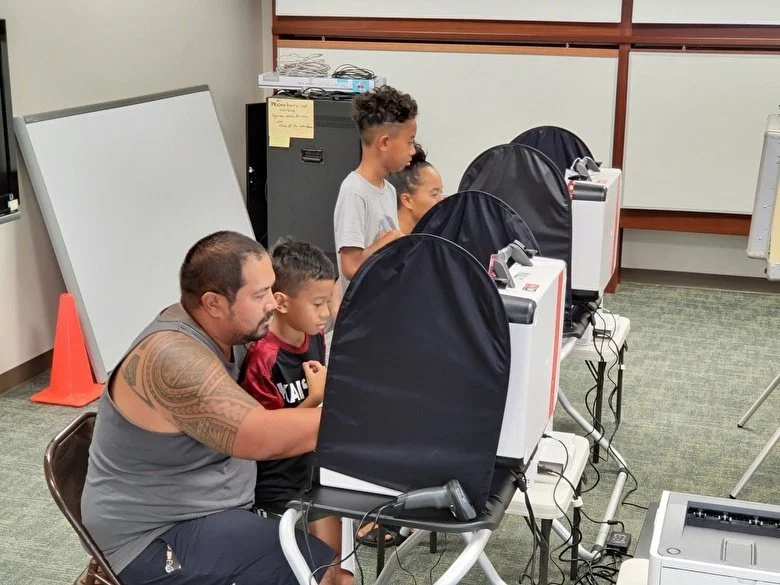
One family of four I approached around lunchtime on Election Day was a group that was receptive to my reporting. I explained what I was attempting to do, explained I wanted to follow them and photograph them through the process, and wasn’t interested in asking nor documenting who they were voting for. The mother and father obliged and their kids, ages 7 and 10, hammed it up for the camera. Their quotes were valuable and made it into my article; my photograph of them voting was published above the fold on the front page of the West Hawaii Today newspaper.
All in all, I was pleased with the work and the papers’ publishing it. But I won’t quit my day job –I’d rather tackle hurricanes and floods than voters on an Election Day.
Time to Sign Up For Springly
Your Treasurer, Michael Phillips, has been busy migrating our club roster, website, communications, and accounting onto a new platform from Springly.
IMPORTANT: Create your online & membership account on our new website at www.bigislandpressclub.org !
1) Click on the “JOIN US / MEMBERSHIP” links on the website.
2) On the page that describes the different membership types (Professional / Associate / General / Senior / Student), click on the yellow “APPLY” button. Even if you’ve been a member forever, you still need to “apply” to be one on Springly.
3) Complete a new membership by typing in your first name, last name, and type of membership you have/want for 2022. Press the yellow “CONTINUE” button to continue your application ‐or‐ click the red “Add a Membership” button if you wish to add additional memberships beyond your own, such as for a spouse, co‐worker, or business partner.
4) Create a password for your email address and click “Save”. The password must consist of at least one number, one lowercase letter, one uppercase letter, one special character among: * ! ? # ; % $ ^ : / $ @ and must be at least 8 characters long. Click on the yellow “SAVE” button to save your password and continue.
5) Now it’s time to provide some required and optional information as part of the membership process. You have the option of uploading an optional profile picture that will be used on the website once you register. Then provide your landline or cell phone, birthday, and mailing address. Please also complete the Additional Information fields; describe your position and employer or school, or note retired, briefly describe your job responsibilities or journalism interest, list any social media profiles the Club should follow of yours, and then type out your full name to confirm you’ve selected the proper membership category type. Last, it’s time to pay dues:
PAYING DUES FOR 2022:
‐If you have already paid your dues for 2022, select “OTHER” and our treasurer will confirm the files and process your membership. You will get a follow‐up email from Springly, our new website platform, that you’re good to go. When it is time to renew dues, the website will alert you and you can process your payment online.
‐If you haven’t yet paid, select “CREDIT CARD” or “CHECK.” When the treasurer confirms your membership, you will receive an email with a link to pay online or instructions on how to mail us a check if you prefer that method. Once your payment is processed, you will get another confirmation email and you’ll be good to go.
‐If there is a new member in the mix (i.e.: you added an additional new member when you registered at the site), that application will be reviewed by the Board for approval. Once the Board approves the new membership, that person will get an email asking for dues payment.
6) Once your registration is processed and verified, you’ll have access to the new & improved club website which includes members‐only content such as photographs of our events, an archive of recent Gleanings, and more!
PROBLEMS OR QUESTIONS? Contact BIPC Treasurer Michael Phillips for assistance: mphillips@weatherboy.com.
DUES are (past)DUE!
Want to pay your 2022 dues, but not quite connected to Springly yet? Don’t delay – the new platform will be a huge step forward for members. In the meantime, you may pay your dues via PayPal to payments@bigislandpressclub.org , or via paper check to Big Island Press Club, P.O. Box 1920, Hilo, HI 96721. Mahalo for your support!