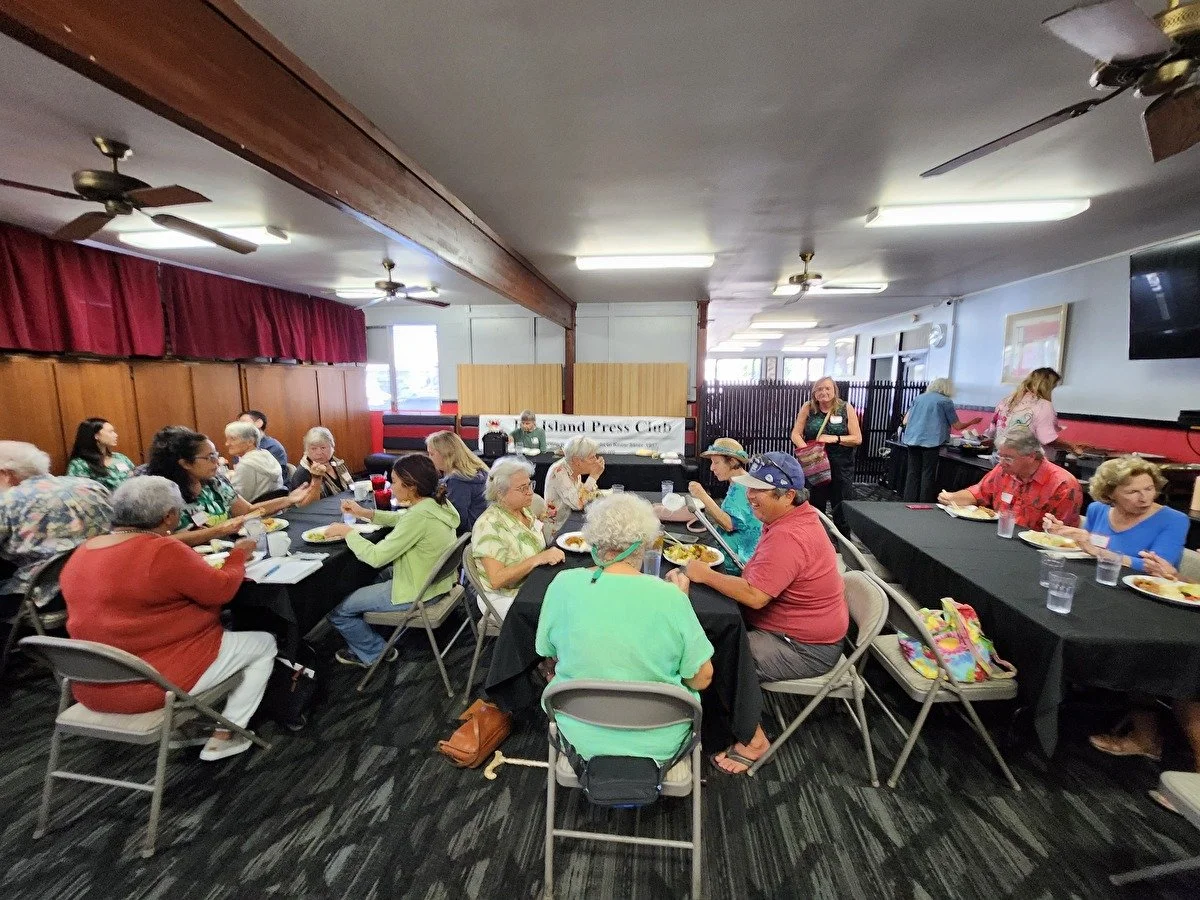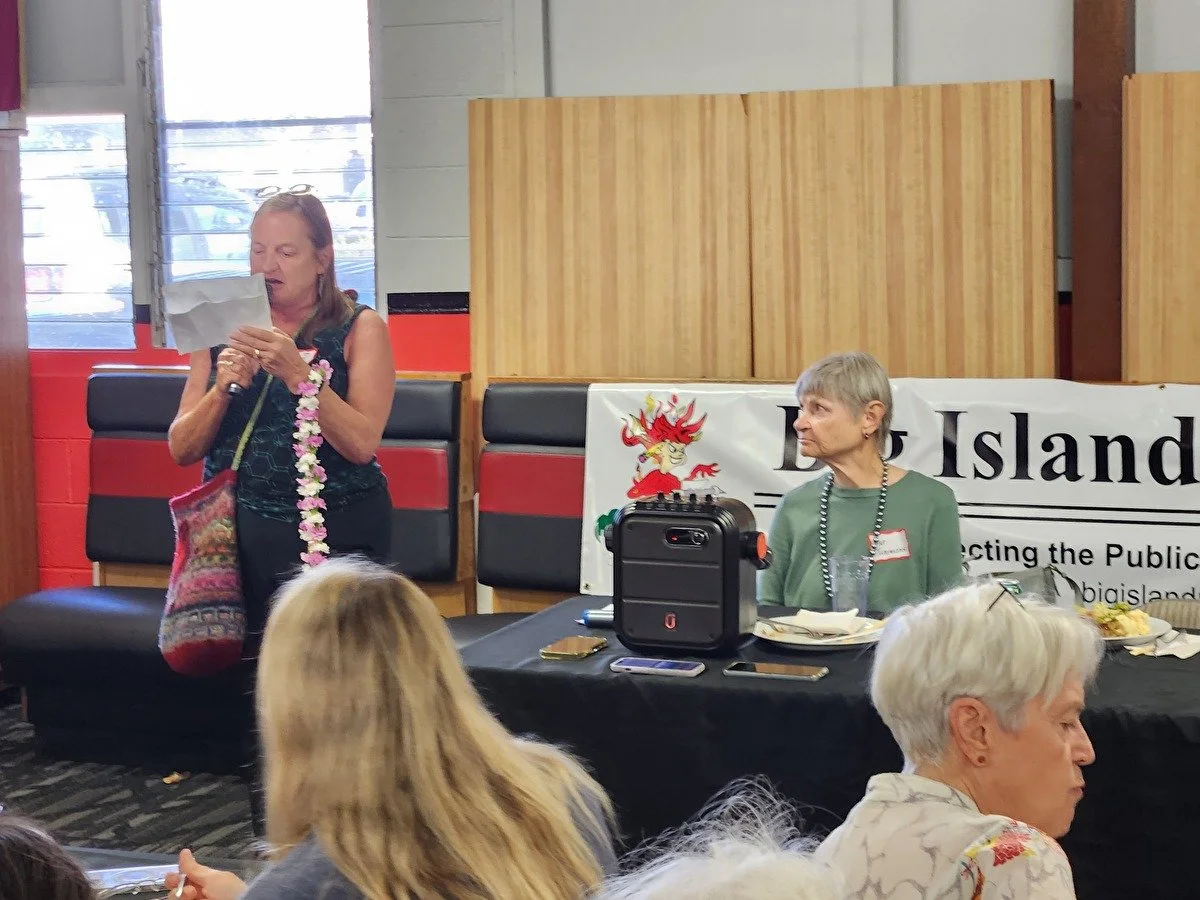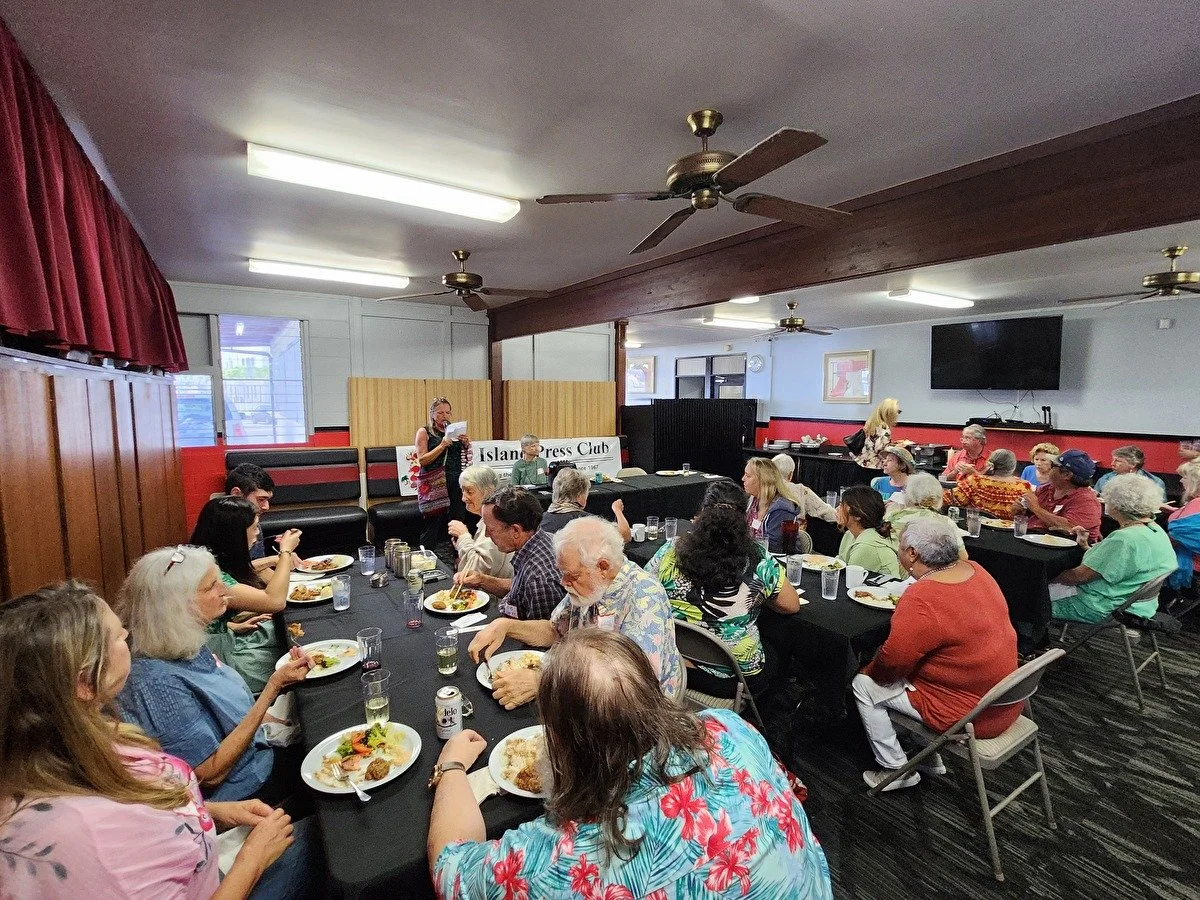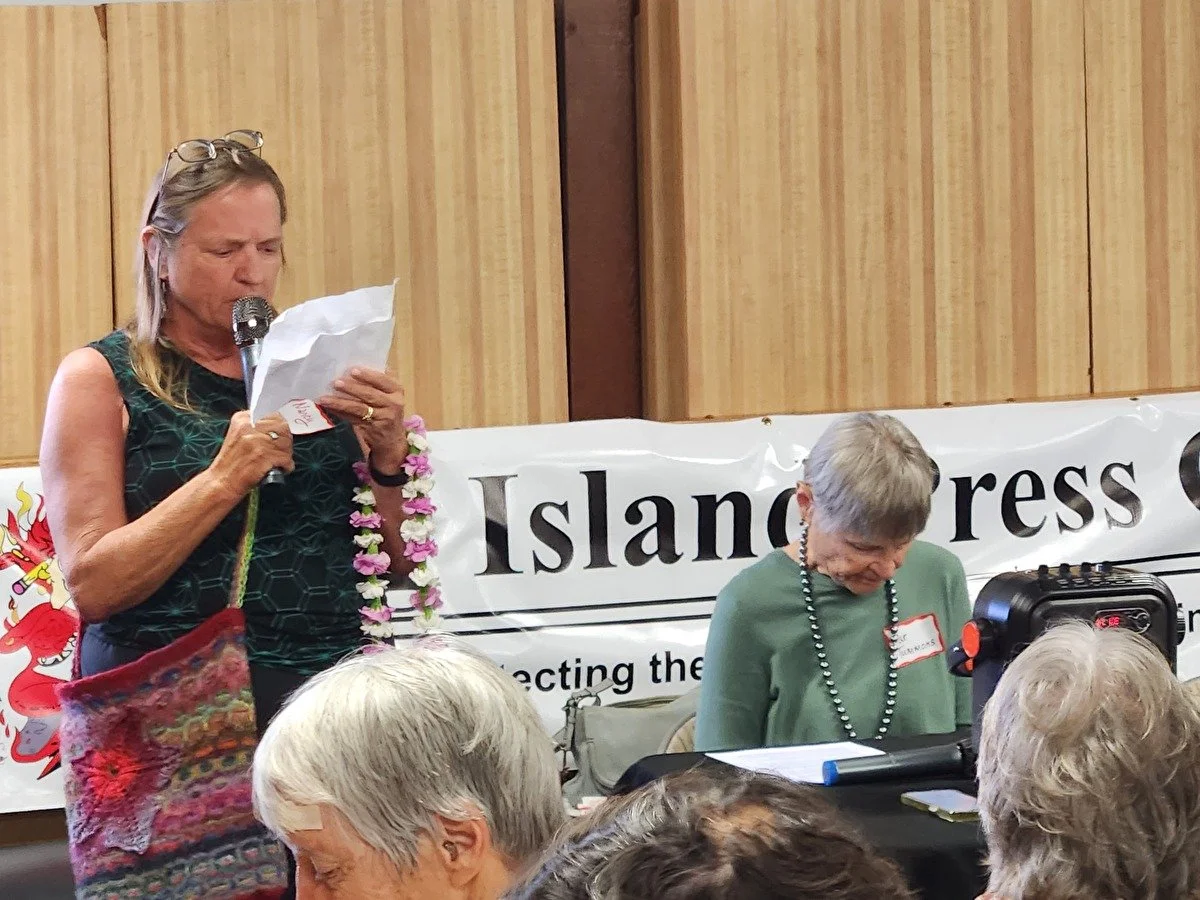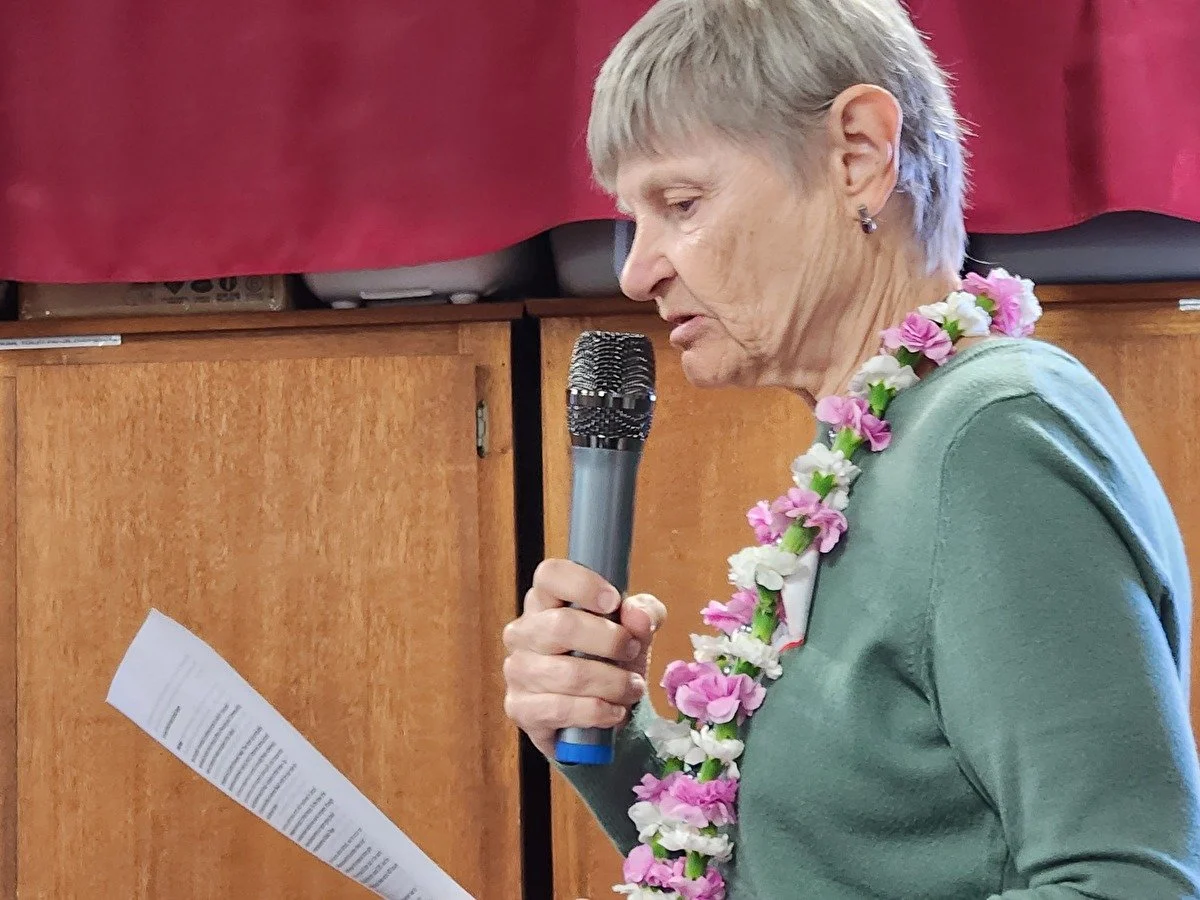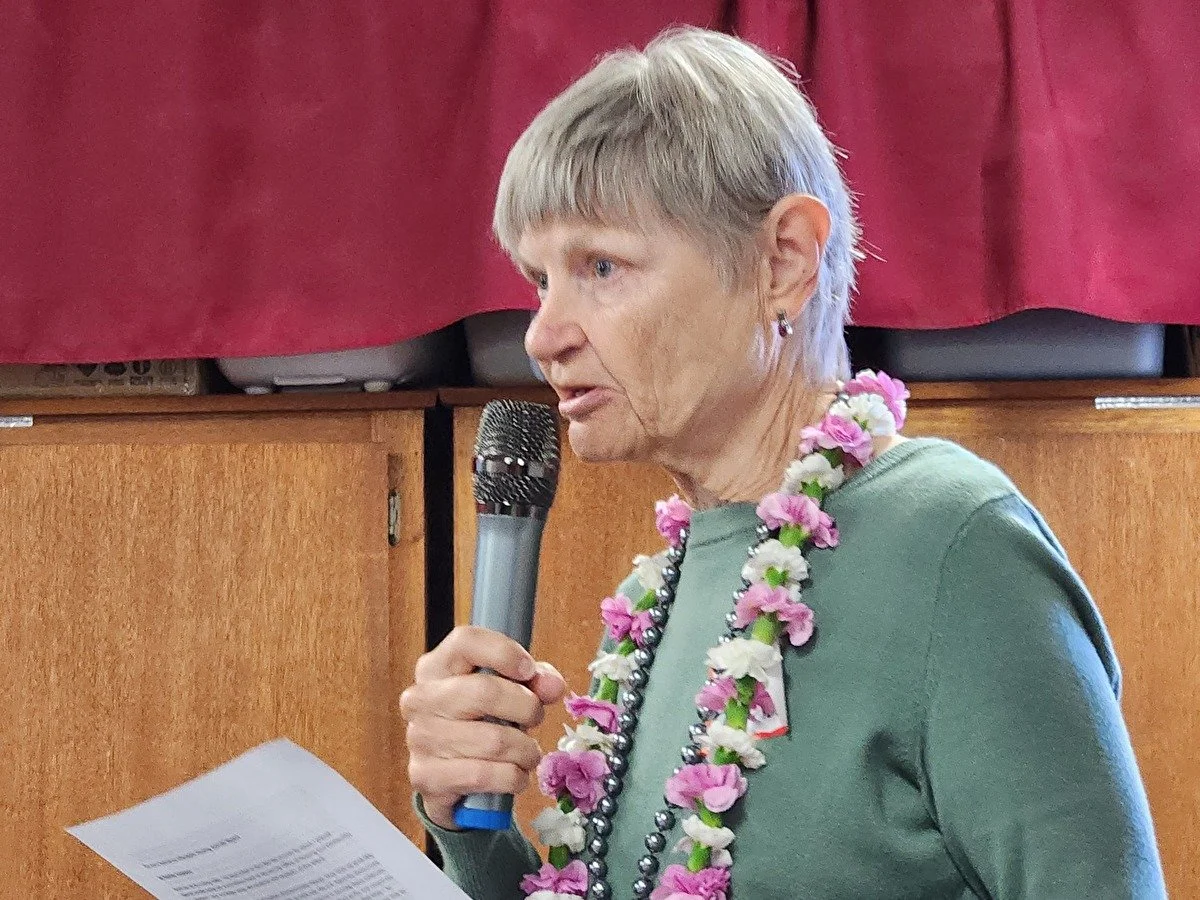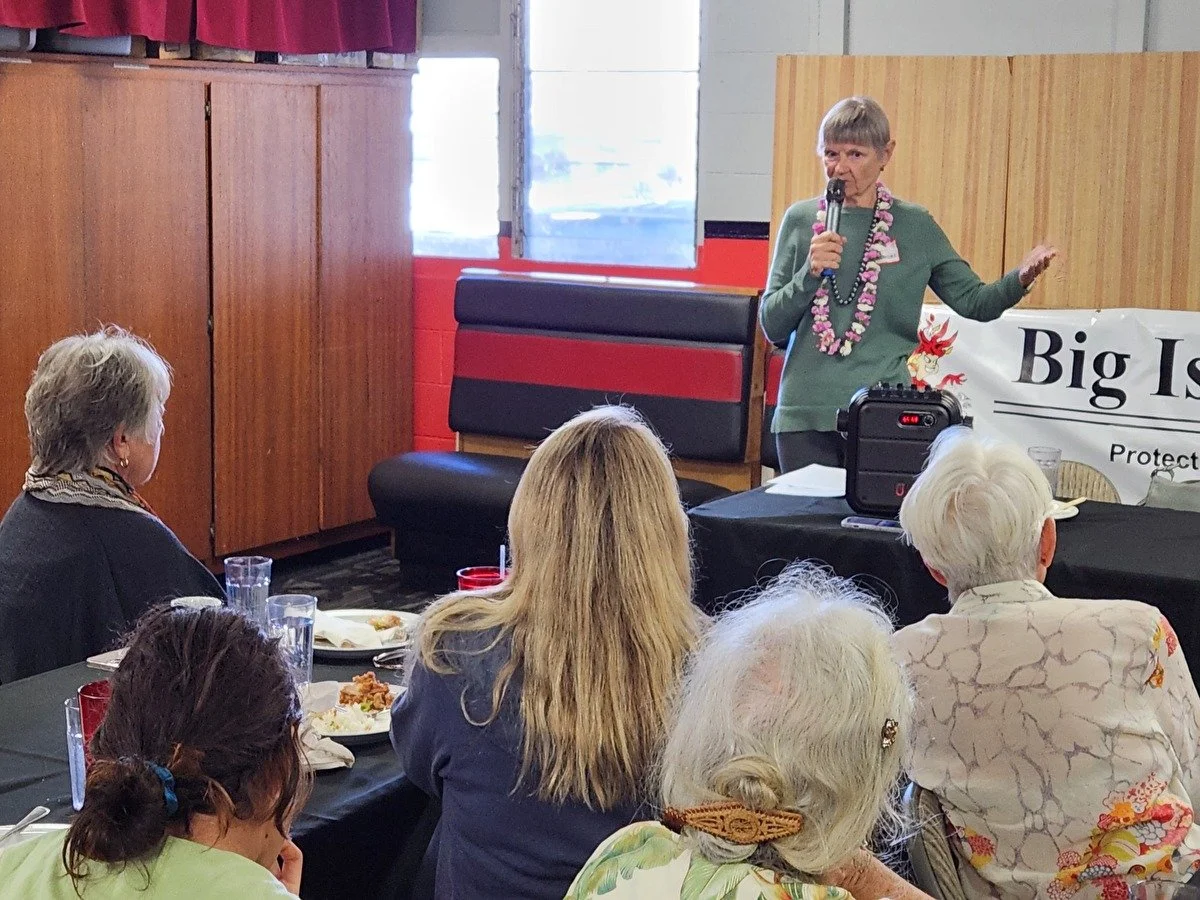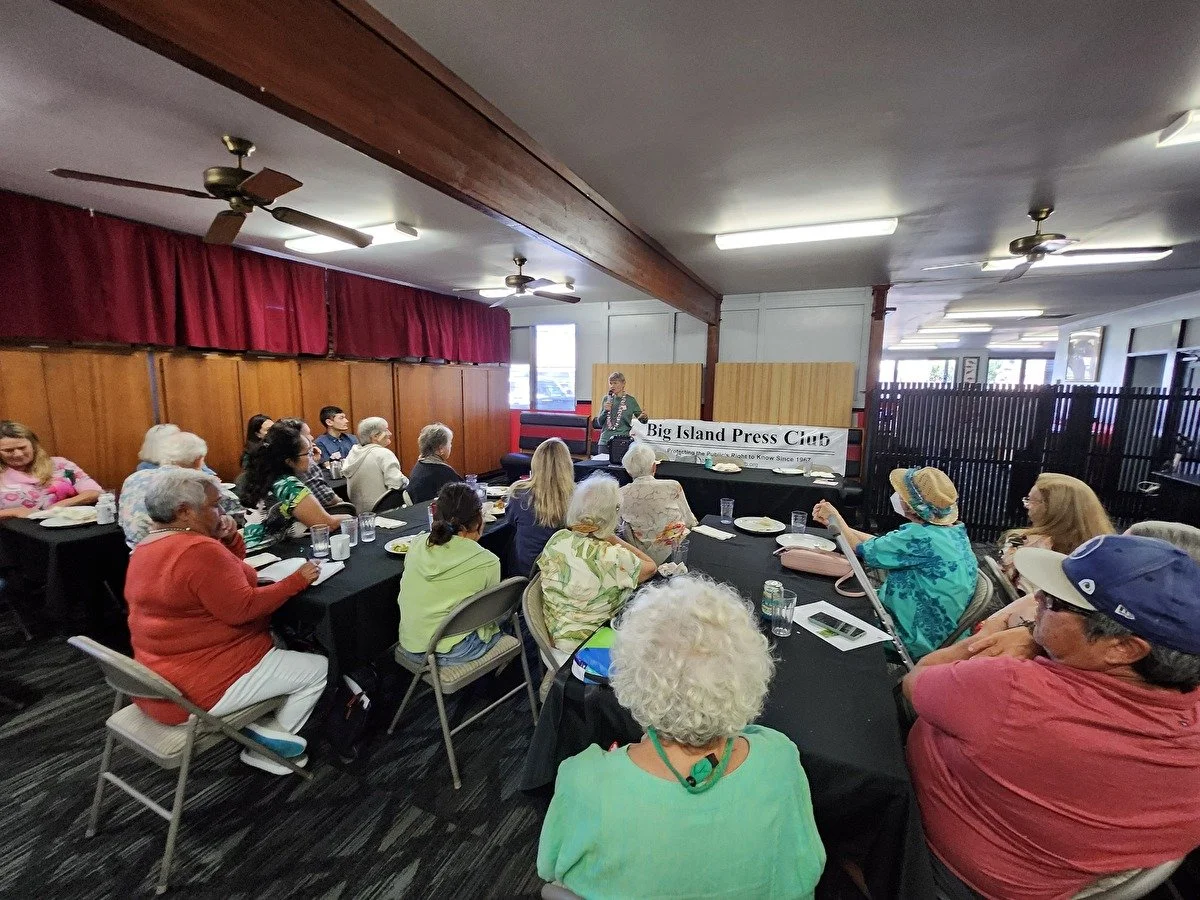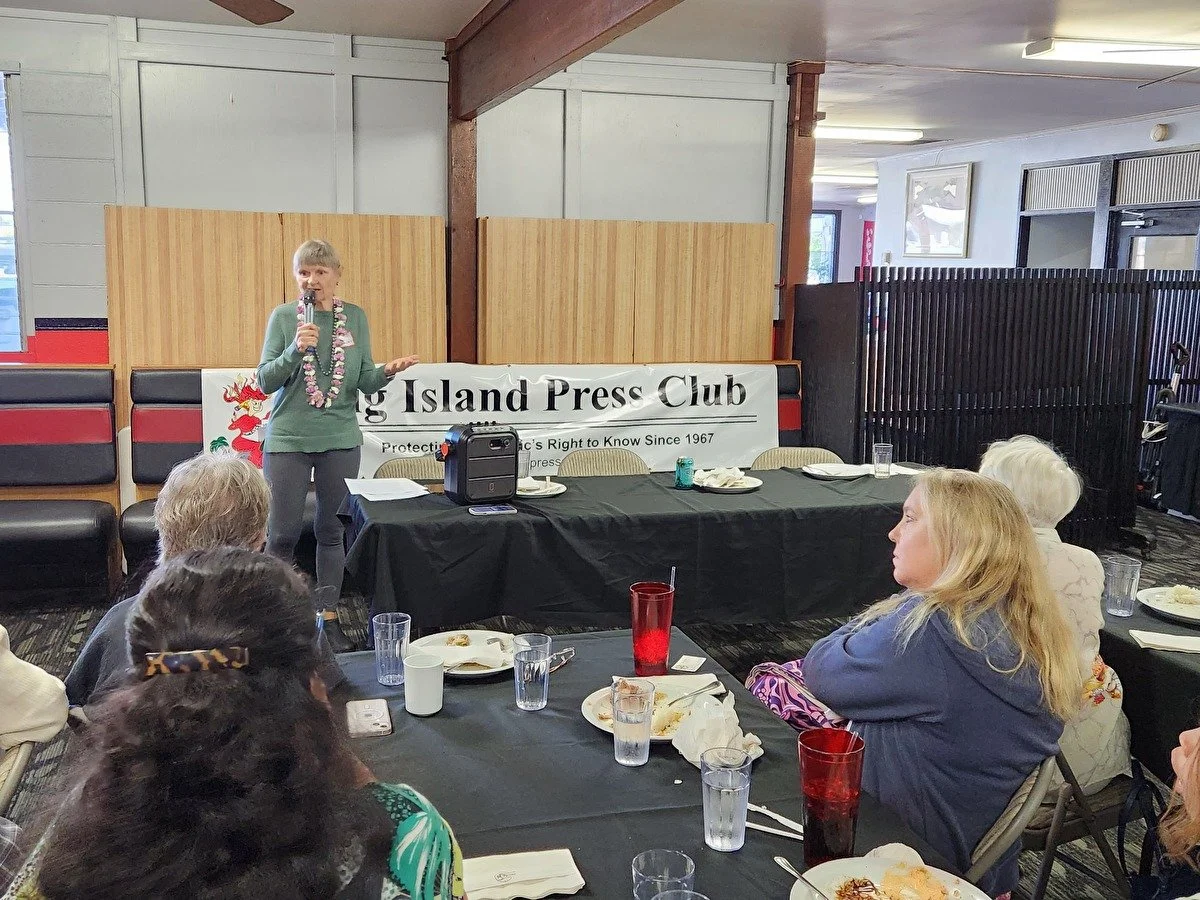
Text by Patricia Tummons, as Presented at the January 2023 Newsmaker Luncheon
Thank you all for coming today. I’ve been asked to describe the process by which I pieced together articles laying out a scandalous fraud on the county Office of Housing and Community Development – and, in a larger sense, the residents and taxpayers of this island.
Those articles appeared in the June 2022 edition of Environment Hawaii. They took up probably around 80 percent of the column inches that month. In early July, the U.S. Attorney announced that Alan Rudo, the former county employee who was instrumental in devising these schemes, was the subject of a criminal information and that he had agreed to plead guilty and cooperate with prosecutors as they brought others involved in the frauds – unnamed at that time – to justice. The U.S. attorney, Clare Connors, kindly gave Environment Hawaii credit for our role in bringing the fraud to federal prosecutors’ attention.
She was not referring to the articles published the previous month, which explained in detail two of the three fraudulent schemes that were the subject of criminal charges. By the time the articles in our June issue were published, the federal investigation was nearly complete, though I had no idea that was the case. Instead, Connors was referring to our reports going back several years on a proposed luxury housing development near Waikoloa Village.
The development, known as Waikoloa Mauka and later as Waikoloa Highlands, was to occur on land mauka of the village. I’m sure most of you have driven by the site countless times and noticed an area enclosed by a rail fence – now in disrepair – with an impressive stone gate announcing the entry into what was to have been the Highlands Golf Estates back in the early 1990s. A Russian-owned company purchased that land, and much more, around 2005. And by 2006, it was asking the Land Use Commission to approve its plans to develop around 400 luxury house lots on 731 acres.
To comply with the LUC’s order placing the land into the Rural district, the developer was to satisfy any and all conditions placed on it by the county Office of Housing and Community Development and was to provide the LUC with a copy of the executed agreement between the Housing Office and the developer within 30 days of its having been signed.
The county’s requirements in turn are to comply with Chapter 11 of the county code. That chapter is far from transparent, but in its most general terms, it requires developers to provide units of affordable housing in a number equal to some percent of the total housing units proposed, with the percent varying according to the degree of affordability. The developer can build the units on its own or turn over land to the county or a non-profit, which will then build the requisite number of units. Or the developer can cash in affordable housing credits obtained by purchasing them from a different developer, and thereby avoid having to develop any affordable housing at all. The excess credits that are sold on the open market are earned when the developer provides very low-income housing, earning as much as two credits for each one unit built.
In the case of Waikoloa Mauka, later known as Waikoloa Highlands, the developer partitioned off just under 12 acres of land along Waikoloa Road where 80 units of affordable housing – 20 percent of the total number of planned market-rate house lots – were to be built. According to a November 2016 housing agreement signed by the developer’s agent, Mayor Billy Kenoi, and then-Housing Director Susan Akiyama, this land was to be conveyed to a non-profit called Plumeria at Waikoloa, which would then build the affordable units. No one checked records at the Department of Commerce and Consumer Affairs to verify if Plumeria really was a non-profit. Nor did anyone question whether it had the ability to follow through on the promised affordable housing.
Had anyone checked with the DCCA, certainly suspicions would have been raised. Plumeria had been organized and registered just days before the housing agreement was signed. And Paul Sulla, whose name is the only one appearing on the registration documents, identified it not as a non-profit, but rather as a limited liability corporation.
After the agreement was signed, things become murky. The affordable housing agreement, which was supposed to be filed at the Bureau of Conveyances and run with the land, never was filed. Nor was any copy of the executed agreement forwarded to the LUC in timely fashion. It took a year and a half from time Billy Kenoi signed the agreement – days before he left office – and the time Plumeria finally took title.
When the land was finally transferred in 2018, Plumeria paid Waikoloa Highlands $55,000 for the land. Nothing in the deed mentions anything about affordable housing.
Within three months of Plumeria acquiring the property, it flipped the parcel over to a company owned by Danny Julkowski of Minnesota for $1.5 million, or more than 27 times what Plumeria itself had paid. Julkowski told me that Alan Rudo had orchestrated the deal for him, including an ironclad promise that Julkowski could build a hardware store, shops, and just 32 units of affordable housing on the site – not the 80 units that should have been required.
I asked Paul Sulla who received the $1.45 million in proceeds from the land sale. He didn’t answer the question, but stated only that “A lot of effort, energy, went into this.” “The record title had to be cleared, a mortgage had to be paid off.” That is a red flag: the owner of the land to be developed is not to benefit from the donation of the property, and the owner was the only party with an outstanding, unpaid note secured by the property. At the time, no one in the Housing Office was curious about this.
In 2018, the Land Use Commission held hearings on why all 731 acres – including Julkowski’s – that had been placed into the Rural land use district 10 years earlier should not lose that status and revert to the state Agricultural district. In the course of those hearings, the attorney for Waikoloa Highlands presented the unrecorded affordable housing agreement signed by Kenoi, while county attorneys presented a letter from Mayor Harry Kim stating that notwithstanding any previous agreements, “the official position of the county” was that the developer had not fulfilled the affordable housing requirement.
Given the LUC’s concerns – not only with the affordable housing condition, but with a host of others as well – it voted in the end to revert the land, including the 11.7 acres that ended up in Danny Julkowski’s lap. Julkowski’s efforts to win county rezoning of the land and then efforts to sell it have so far come to naught.
This Waikoloa Mauka-Waikoloa Highlands reporting had a lot of moving parts. Documents I had obtained from state and county offices, plus my own voluminous notes from LUC hearings, came to several hundred pages. I’m not even going to address here the lengthy and serious criminal charges – and convictions – made against the developer’s representatives over the course of the preceding quarter-century. Nor will I dwell on the even more lurid and credible accusations against them involving smuggling of blood diamonds and drugs. The CEO of the outfit, Stepan Martirosian, was able to get at least some part of a federal sentence involving drug trafficking reduced by offering the FBI information on the Russian secret service, known at the time as the KGB. Martirosian at the moment languishes in a prison cell in Armenia. Long story…
As colorful as these characters were, and as sketchy as the affordable housing deal was, you would be looking long and hard for any reporting on this in the local news media. Maybe that’s because the LUC proceedings are drawn out and arcane, or because most reporters are not given by their editors the time and resources needed to develop a story like this.
Whatever the reason, Environment Hawaii was the only publication that mentioned the strange affordable housing deal that left poor Danny Julkowski holding the bag.
Our reporting eventually led to the federal investigation culminating in the indictments last July. Following the publication of our articles in 2018, a county employee alerted the FBI to the odd affordable housing deal that Rudo had orchestrated.
In 2020, I again spoke with Julkowski in connection with his unavailing attempt to obtain county rezoning of his property. He mentioned that he had received “threatening phone calls towards my family.”
“The main thing is, the county employees came to us. … I purchased that property based on county employees working with us. All of a sudden they get fired and they disappear. And then I’m standing alone,” he told me.
“Then one day I get a phone call from the FBI, saying, ‘What do you know about this project?’”
That interview with Julkowski was the first I learned of the FBI’s investigation.
For the next year and a half, I learned nothing more. Then early last year, something came to my attention that looked just wrong. I had been dimly aware that the county issued affordable housing credits to developers in return for their building affordable units. I had not been aware that there was something amounting to an open market in the sale of these credits.
And so it was that I came upon two more schemes in which Rudo played a critical role, and in which his bosses played minor, but equally important, parts. Essentially, under these two schemes, affordable housing credits were issued to companies set up by Rudo and his co-defendants, and those same credits were then used to purchase the land on which the affordable housing was to be built. No one ever bothered to figure out the scheme, although it was there in full view. Documents related to these purchases clearly show that the county’s award of the excess affordable housing credits allowed the purchase of the Waikoloa and Kealakehe lands.
Rudo and the three other men named as defendants – Rajesh Budhabhatti of Puna, and Hilo attorneys Paul Sulla and Gary Zamber – had no intention or ability to develop housing. But they did identify companies that did. In one case, in Waikoloa Village, there is today an actual affordable housing development, built on land that Rudo & Company purchased with housing credits. In the other, involving land in Kealakehe, there is still nothing. Technically, the land is still owned by the sham development company, called West View Developments. What will happen to it is in the hands of the federal court. The county has claimed it should be given title, inasmuch as the land was purchased with fraudulently obtained county affordable housing credits. The developer, which executed a long-term lease on the property with West View, says it should be allowed to move forward with its plans, since it negotiated in good faith with West View and had no idea that anything was amiss.
Rudo’s sentencing is scheduled for April. I checked the federal court records yesterday and apparently he and his attorney are trying to negotiate a deal. Trial for the three other accused men is set for August. In late December, Budhabhatti asked the court for permission to travel to India for 15 days. Permission was denied.
Looking back at how this story developed over the years, a few journalistic habits come to mind.
First, there’s what I’ll call the “throw it out there” habit. A few months ago, I was listening to a Wall Street Journal podcast in which the reporters who broke the Enron story talked about what led up to that scoop. One of them, Rebecca Smith, mentioned how she was puzzled by something she had read in one of Enron’s filings with the Securities and Exchange Commission. She didn’t understand it, but she included a couple of paragraphs mentioning this in one of the articles she co-authored.
It turned out to be hugely important. Someone who did understand what that meant called her up and explained it, and the subsequent reports led ultimately to Enron’s collapse and the filing of criminal charges against key executives.
In the podcast, Smith talked about the importance of putting things out there in the public even if you don’t know what they are or what they mean. “I think of these as a letter in a bottle. You put the letter in the bottle. You toss it in the ocean. You have no idea where it’s going, or if anyone is ever going to pick up on it.”
In the case of my reporting on the affordable housing deal involving Julkowski, I threw out a number of bottled letters. One of them was the discrepancy between the description of Plumeria at Waikoloa as a non-profit – and compliant with Chapter 11 – in the unrecorded housing agreement, and its description as a for-profit company in the warranty deed. I asked Paul Sulla about this at the time and he brushed me off. Still, I thought it was important. I wasn’t sure exactly what it meant, and the fact that so many county officials had signed off on this lent support to the idea that there was nothing to see here. Nonetheless, into the bottle it went.
A second habit is just showing up. And, in the special case of Environment Hawaii, that means showing up when no one else does. For years, I was the only journalist attending meetings of the Western Pacific Fishery Management Council. Now Civil Beat also follows Wespac, and for that I’m grateful. There’s enough news there to go around. Still, I usually fly solo at meetings of the Land Use Commission, while my colleague Teresa Dawson rarely meets any fellow journalists at meetings of the Agribusiness Development Corporation, to give a couple of examples.
A third habit involves running with my curiosity. I love going down rabbit holes – and these days, the internet makes that so easy. Often, what I’m able to find there (and, importantly, verify) leads to tossing a few more bottles in the ocean.
There’s just the habit of conducting routine checks. Whenever I’m writing about a person or company, I invariably run their names through the federal court logs (PACER), state logs (ecourt kokua), and the state Bureau of Conveyances. In the case of land developments, checking county Planning Department files on tax map key parcels is part of the process.
Maybe most important of all, I don’t bow before sacred cows and I don’t accept authority unquestioningly. In the case of affordable housing, it has been given a pass, with streamlined permitting and little public, or council, oversight. No one wants to be seen as standing in the way of measures intended to address this issue. The county does have a Housing Agency, but it meets so infrequently that I imagine few of you even know it exists. And from what I have seen of it, the members – a one-to-one match to the county council – do little more than applaud the actions of the Housing Office administrator. And the fact that a document has received required approvals by appropriate officials should not be taken to mean that it is unproblematic. Some of the documents signed by the corporation counsel in all three fraudulent housing schemes I reviewed contain mistakes that should have been caught with simple proofreading, to say nothing of their approval of schemes that were so wrong on their very face. On top of that, how on earth could the housing administrator sign off on agreements that so glaringly conflict with the county code?
Environment Hawai`i rarely gets tips. When news of the housing fraud broke in the wider media and the role of Environment Hawaii was mentioned, someone made a comment on the Civil Beat website to the effect that this was so complicated, someone in the county must have tipped me off and explained the process to me. Nothing could have been further from the truth. In fact, I’ve come to think that precisely because the process is so complicated, county employees themselves, from the OHCD director on down, were happy to leave the whole affordable-housing development bailiwick to Rudo. He would package proposals and draw up the agreements and then present them to his boss to sign. Time and again, review by the corporation counsel attorney assigned to Housing would be cursory – if that – and the signatures of the housing director and mayor would be given perfunctorily.
I don’t know if there are more cases out there like the ones that I’ve reported on. Given the years of investigation by the FBI, I would hope they would have found them if they exist.
Since last July, there have been some developments. Maybe the most significant is the introduction of Bill 9, which received a favorable hearing when it came before the County Council’s committee on planning, land use, and development on January 5. If passed, the Office of Housing would be required to provide the council with, among other things, quarterly reports listing the number of affordable housing credits outstanding, along with the parties holding them. Also, the office would be required to give the council notice within 30 days of any affordable housing agreement it signs off on.
Soon after news of the scandal broke, a resolution was introduced to the County Council asking the county auditor to conduct a full performance audit of the Housing Office’s affordable housing policies to ensure that it was able to administer housing credits appropriately and also to develop a list of all credits issued, outstanding, transferred, and redeemed. The housing administrator opposed it, as did others in the administration, on the grounds that it might interfere with possible ongoing federal investigations, and also because the Housing Office had itself retained a consultant earlier in the year to review its practices and policies more generally. By the time the resolution was adopted by the council, the scope of the county audit was far narrower. The audit is apparently ongoing.
As for that consultant report: Susan Kunz, the current housing administrator (and also the administrator who signed off on two of these three affordable housing agreements), said on several occasions last year that the report would be available in the fall, specifically “September or October.”
In December, I asked to see the report and was told that, “to date, we have not received the consultant’s report.” Earlier this week, I filed a request to view the consultant contract. So far, I’ve not received anything from OHCD.
January 2023 Newsmaker Luncheon — Pat Tummons